- Tel:+8613791055589(Mob.)
- Email:smithbai2016@outlook.com
-
 Whatsapp:+8613791055589

Maintenance of Construction Hoist
Release time:2023-02-04 Click:95
Steel structure: Visually inspect cage, mast section and tie‑in frame for deformation, cracks and weld fractures. Guardrails, cage doors and landing doors shall open and close flexibly with effective door‑lock devices.
Guide rollers: Guide rollers intact with normal clearance; no abnormal noise from roller bearings.
Drive system: Gear‑rack meshing in good condition without foreign objects; reduction gearbox free of oil leakage with proper oil level.
Brakes: Motor brakes operate sensitively, free of oil contamination and provide reliable braking performance.
Safety devices: Test upper/lower limit switches, ultimate limit switches, fall‑arrest safety device, emergency‑stop button, cage‑door interlock and landing‑door interlock to confirm valid function.
Counterweight (if equipped): Counterweight guide rollers in good condition; wire ropes free of damage.
Lubrication: Apply grease to racks and guide rails as required.
Electrical system: Cables without damage; travelling cable free of jamming; reliable earthing; operating handles return to zero position.
After operation: Lower cage to ground level, cut off main power supply, fill in hand‑over record.
Thoroughly fasten bolts and pin shafts of mast sections and tie‑in frames; split cotter pins shall be fully opened and complete.
Inspect wear condition of gear and rack; clear foreign matters and replenish lubricating grease.
Inspect each driving unit roller and back‑up roller; adjust clearance.
Check mechanical locks and electrical interlocks of cage doors and landing protective doors; machine shall not start if any interlock fails.
Inspect travelling cable and cable guide frame, no twisting or squeezing.
Check buffer springs / buffer blocks intact and undamaged.
Retorque high‑strength bolts: Retighten connecting bolts for mast sections and tie‑ins with torque wrench to torque values specified in manufacturer’s manual.
Fall‑arrest safety device: Check appearance and confirm within calibration validity period. Fall‑arrest safety devices shall be calibrated every 12 months and sent for inspection upon expiry.
Reduction gearbox: Check oil level, oil quality, leakage, overheating and abnormal noise; unclog breather plug.
In‑depth brake inspection: Replace brake pads when over‑worn; brake wheel without grooves; no plastic deformation of brake springs.
Gear and rack: Replace immediately when tooth‑surface pitting, wear or cracks reach scrap criteria.
Wire rope (counterweight type): Inspect broken wires, corrosion and deformation; reliable rope‑end fixation.
Electrical system: Fasten terminals; inspect contactors and limit switches; earthing resistance ≤4 Ω.
Adjust cage guide clearance; inspect anti‑fall stop blocks.
Disassemble and inspect drive unit; check wear of gears and bearings; replace lubricant if necessary.
Full inspection of tie‑in frames and embedded parts; visual weld inspection; conduct anti‑corrosion treatment for rusted areas.
Inspect base and connecting bolts of fall‑arrest safety device; inspect buffer devices.
Clean dust from motors and electric control boxes; inspect carbon‑brush wear.
Inspect all safety interlock switches; replace aged switches directly.
Derust and apply anti‑corrosion coating for whole steel structure; repair or replace deformed / cracked components.
Thoroughly clean and refill reduction gearboxes; replace oil seals; inspect gear wear.
Send fall‑arrest safety device to qualified institution for calibration and inspection.
Overhaul motors and brakes; replace worn bearings and brake pads.
Comprehensive inspection of cables, contactors, relays and limit devices; replace all aged components.
Complete whole‑machine safety performance test; establish complete maintenance file.
Before & after erection / dismantling: Focus on mast section joints, pins, tie‑ins, fall‑arrest safety device and limit switches. Forbid operation with unresolved faults.
After heavy wind or rain: Check mast verticality; retighten tie‑in bolts; inspect cables and steel structures for damage.
Storage out‑of‑service for over 1 month: Clean whole machine and apply anti‑corrosion treatment; implement moisture‑proof protection for electric parts. Complete full‑range monthly maintenance before re‑commissioning.
After relocation disassembly‑reassembly: Perform maintenance equivalent to annual overhaul; replace all damaged components.
Gear and rack: Scrap when tooth thickness wear ≥10 % of original thickness, tooth‑surface cracks or spalling occur. Welding repair for continued use is prohibited.
Brake assembly: Replace brake pads with wear over 50 %; replace brake wheel with groove depth>1.5 mm; replace springs with plastic deformation.
High‑strength bolt: Prohibit reuse when elongated, cracked or thread‑damaged; replace directly.
Fall‑arrest safety device: Must be sent for calibration after expiry or after triggering anti‑fall action; shall not be used without calibration.
Wire rope: Scrap immediately for excessive broken wires, heavy corrosion, kinks or bird‑cage distortion.
Reminder: All maintenance activities shall be recorded. Major repairs shall be carried out by qualified organizations.
Hot products
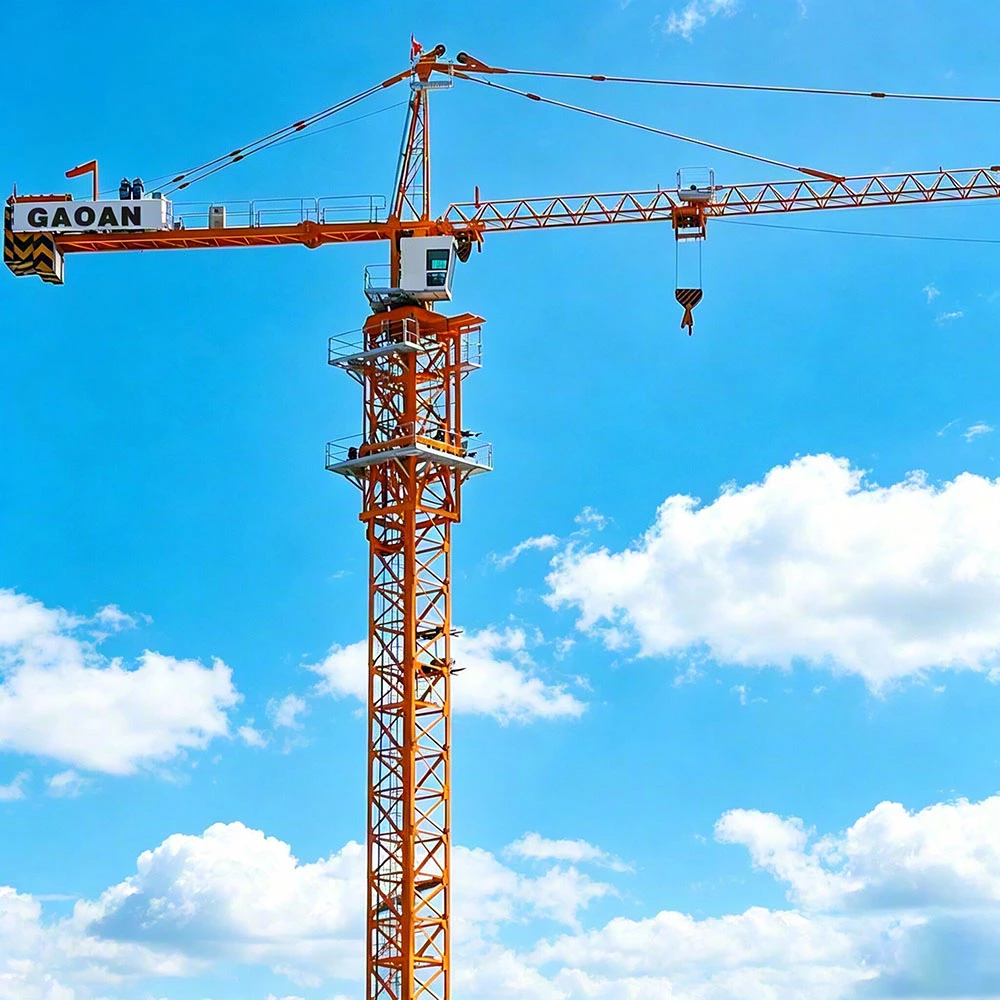
QTZ80(TC5610) Topkit Tower Crane | 6 Ton Construction Tower Crane‑Shandong Gaoan
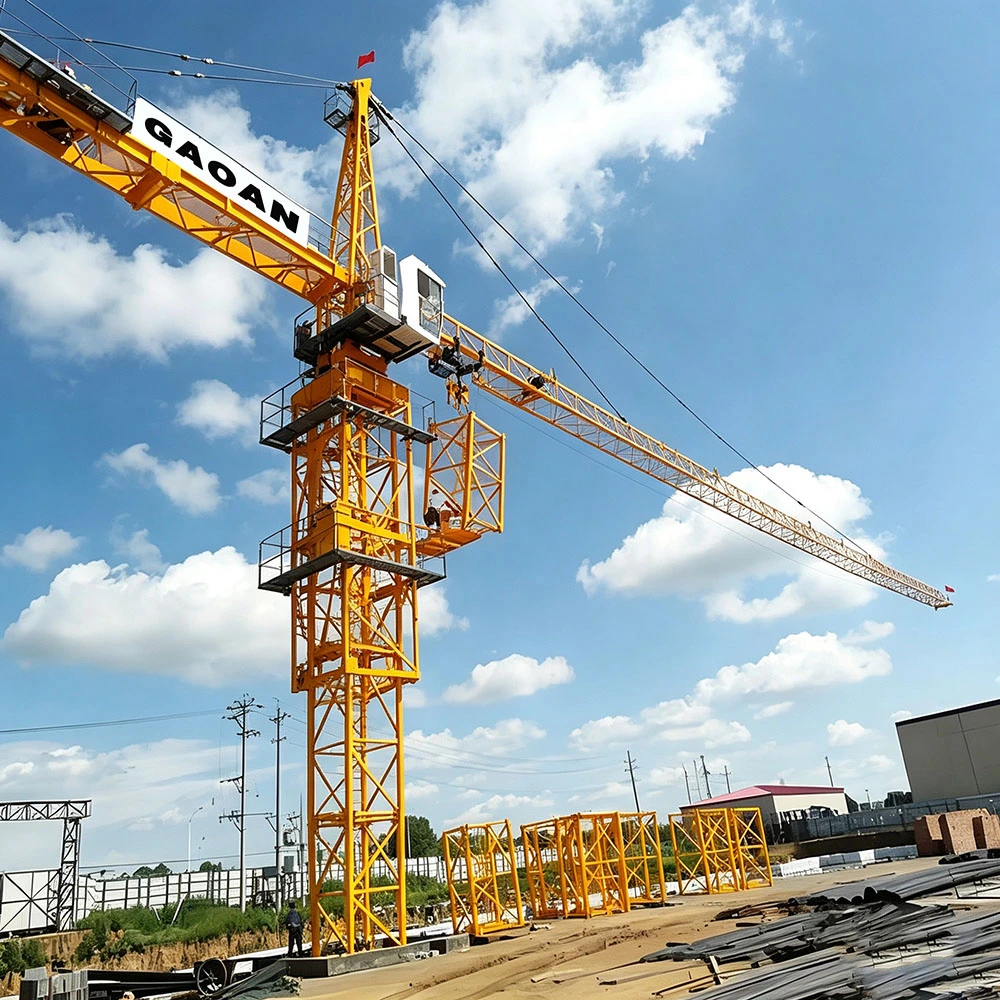
QTZ100(TC6013) tower crane
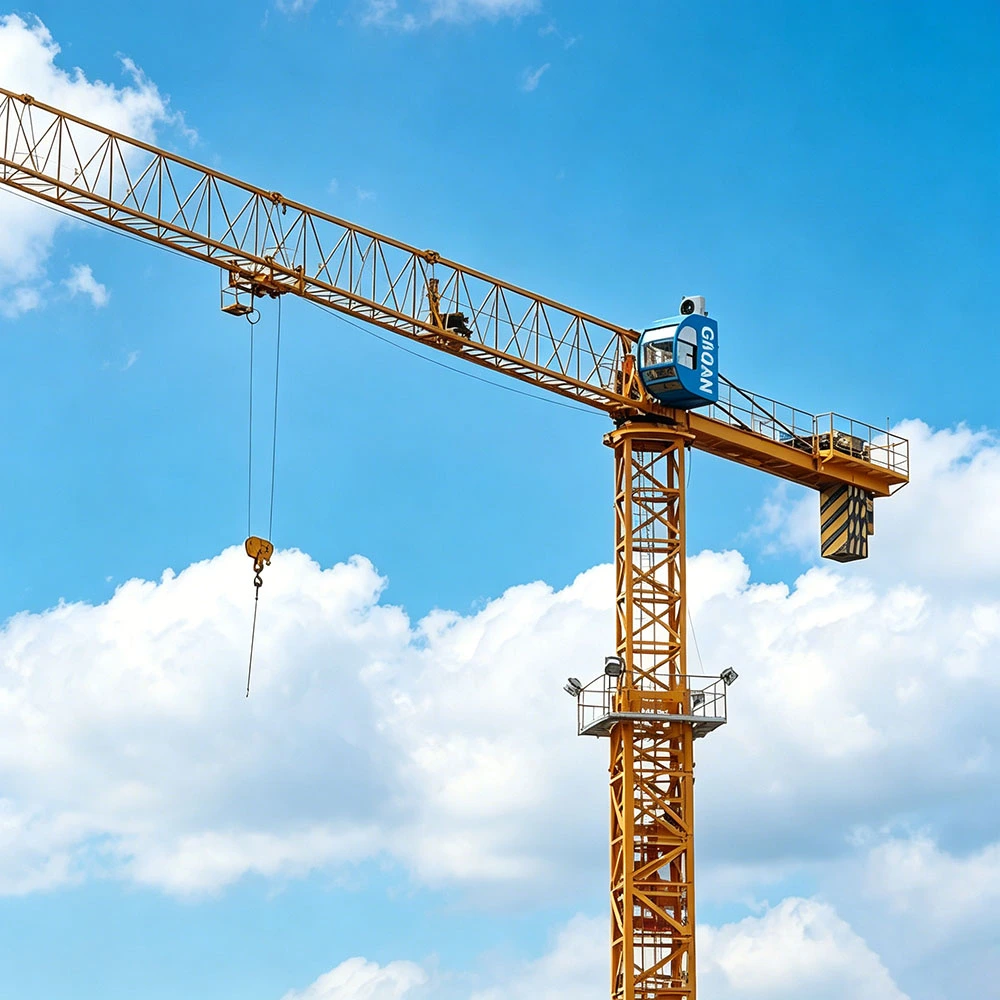
QTZ160(P6020) tower crane
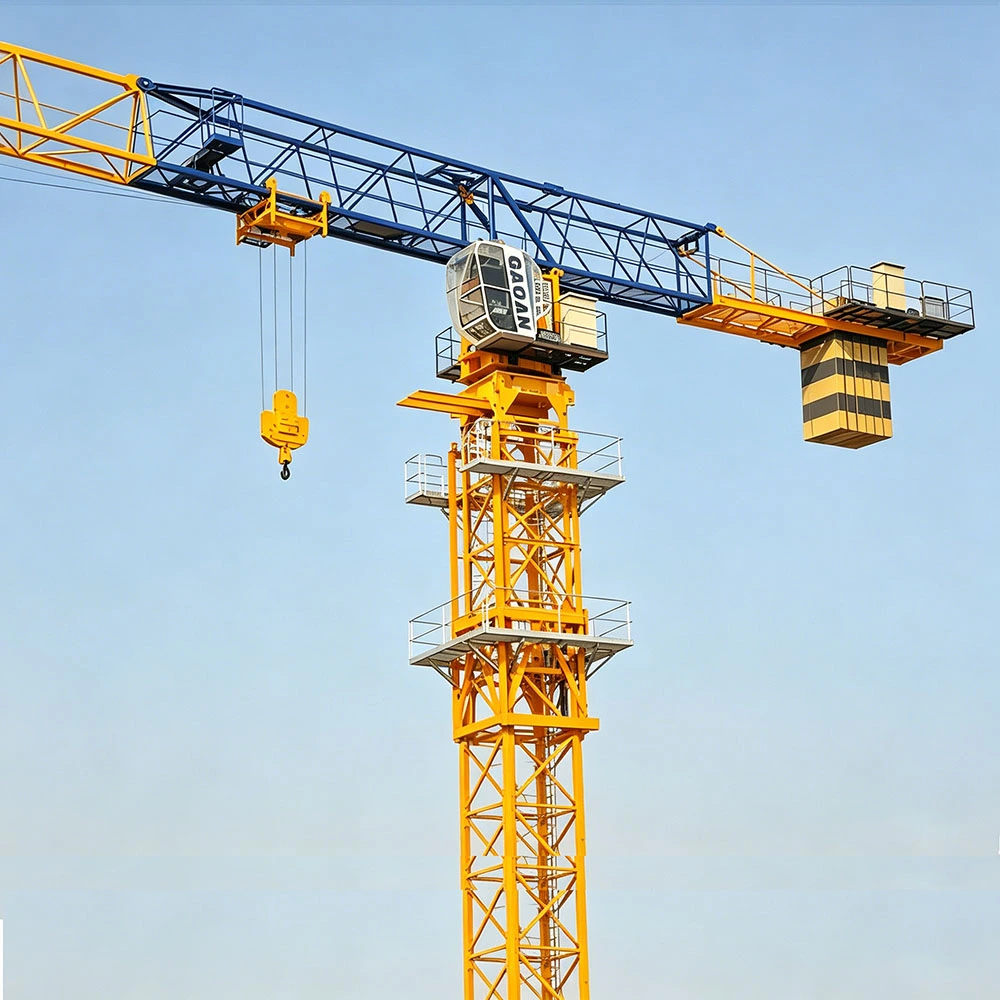
QTZ250(P7030) Topkit Tower Crane | 16 Ton 2500kN·m Construction Tower Crane‑Shandong Gaoan
Tel:+8613791055589(Mob.)
E-mail:smithbai2016@outlook.com

CONTACT US


